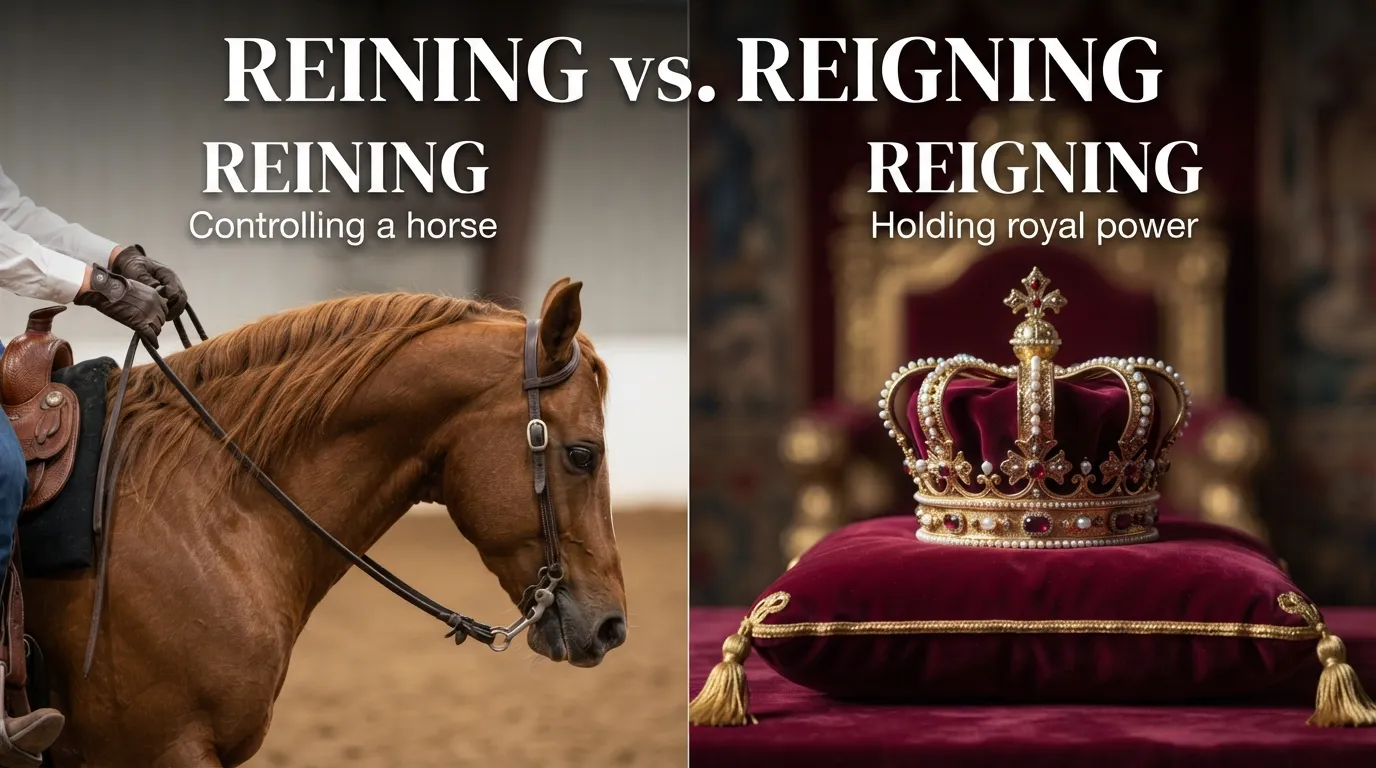
“Reining” relates to controlling a horse, while “reigning” means ruling as a king, queen, or leader.
Imagine a horse rider at a competition. The rider pulls the reins gently and guides the horse. This is called reining. Now imagine a king sitting on a throne and ruling a country. This is called reigning. Both words sound almost the same, but they have very different meanings. People often search for reining or reigning because these words are homophones. Homophones sound alike but have different spellings and meanings. This can cause confusion in writing, schoolwork, emails, and social media posts.
“Reining” comes from the word “rein,” which means to control a horse using straps. “Reigning” comes from “reign,” which means to rule or lead. Understanding the difference between reining and reigning helps you choose the right word. Whether you are writing about horse riding, leadership, history, or power, the correct spelling matters.
Pronunciation
WordUS PronunciationUK PronunciationReining/ˈreɪnɪŋ//ˈreɪnɪŋ/Reigning/ˈreɪnɪŋ//ˈreɪnɪŋ/
Both words sound the same in American and British English.
Want to learn more: https://suitmean.com/wp-admin/post.php?post=338&action=edit
Difference Between Reining and Reigning
1. Meaning
Reining means controlling or guiding a horse with reins.
Reigning means ruling or holding power as a king, queen, or leader.
Examples:
- The rider is reining in the horse.
- Queen Elizabeth was reigning over the kingdom.
2. Word Origin
Reining comes from the noun “rein.”
Reigning comes from the noun “reign.”
Examples:
- The horse responded well to reining.
- The king’s reigning period lasted many years.
3. Connection to Horses
Reining is strongly connected to horses and horse riding.
Reigning has nothing to do with horses.
Examples:
- She enjoys reining horses.
- The reigning champion won another title.
4. Connection to Power
Reigning is connected to power, leadership, and authority.
Reining is connected to control through physical reins.
Examples:
- The queen has been reigning for many years.
- The rider is reining the horse carefully.
5. Part of Speech
Both words are forms of verbs.
Reining is the present participle of “rein.”
Reigning is the present participle of “reign.”
Examples:
- He is reining the horse.
- The king is reigning over the land.
6. Use in Sports
Reining is a type of horse-riding competition.
Reigning is often used in sports to describe the current champion.
Examples:
- She competes in reining events.
- The reigning champion defended his title.
7. Use in History
Reigning is common in history books.
Reining is rarely used in historical writing unless horses are involved.
Examples:
- The king was reigning during a difficult time.
- The soldiers practiced reining their horses.
8. Spelling Difference
Reining contains the letter combination “rein.”
Reigning contains the letter combination “reign.”
Examples:
- Reining = controlling a horse.
- Reigning = ruling a kingdom.
9. Common Phrases
Common phrases with reining include:
- Reining in a horse
- Reining competition
- Reining skills
Regular phrases with reigning include:
- Reigning monarch
- Reigning champion
- Reigning king
Examples:
- The rider showed excellent reining skills.
- The reigning champion won the race.
10. Memory Trick
Think of “reining” as related to reins on a horse.
Think of “reigning” as related to a king or queen’s reign.
Examples:
- Reining → horse reins.
- Reigning → ruling reign.
Nature and Behaviour of Reining and Reigning
Nature of Reining
Reining is an action word. It describes controlling or guiding a horse. It usually appears in horse riding, ranch work, and equestrian sports.
Reining requires skill, balance, and careful movement. A rider uses reins to guide the horse’s direction and speed.
Example:
- The rider is reining the horse around the arena.
Nature of Reigning
Reigning is also an action word. It describes ruling or leading people, a country, or an organization.
It is often used when talking about kings, queens, governments, champions, or leaders.
Example:
- The reigning champion remains undefeated.
Why People Get Confused About Reining and Reigning
People confuse these words because they sound exactly the same.
Both words are pronounced like “ray-ning.” However, their meanings and spellings are different.
The main reason for confusion is that English has many homophones. Words such as “right” and “write” also sound alike but have different meanings.
A simple way to avoid mistakes is to remember their root words:
- Rein → Reining → Horse control.
- Reign → Reigning → Ruling or leadership.
Comparison Table
| Feature | Reining | Reigning |
| Meaning | Controlling a horse | Ruling or leading |
| Root word | Rein | Reign |
| Related to | Horses | Kings, queens, leaders |
| Pronunciation | /ˈreɪnɪŋ/ | /ˈreɪnɪŋ/ |
| Common use | Horse riding | Leadership and sports |
| Example | Reining a horse | Reigning champion |
| Part of speech | Verb form | Verb form |
| Similarity | Both sound the same | Both sound the same |
Similarities
- Both are spelled with “-ing.”
- Both sound the same.
- Both are related to their root words.
- Both can describe an ongoing action.
The Origin of Reining
The word “reining” comes from “rein,” which comes from Old French and Latin roots. A rein is a strap used to control a horse.
The word became common in English because horses were important for travel, farming, war, and transportation.
Today, reining is also the name of a popular equestrian sport. Riders guide horses through special movements and patterns.
The Origin of Reigning
The word “reigning” comes from “reign.” The word “reign” comes from Old French and Latin roots connected with kingship and rule.
A reign refers to the period during which a king or queen rules.
Over time, the word also gained broader meanings. Today, “reigning champion” can describe the current winner of a competition.
British vs American English
There is no spelling difference between reining and reigning in British and American English.
Both forms are correct in both varieties of English.
| English Type | Reining | Reigning |
| American English | Same spelling | Same spelling |
| British English | Same spelling | Same spelling |
| Canadian English | Same spelling | Same spelling |
| Australian English | Same spelling | Same spelling |
Examples:
- American English: The reigning champion won.
- British English: The reigning champion won.
The meaning remains the same in all major English varieties.
Which One Should You Use?
Use reining when talking about horses, horse riding, or controlling an animal with reins.
Use reigning when talking about rulers, leadership, champions, or a period of power.
For US English
Use both spellings in the same way.
For UK English
Use both spellings in the same way.
For Global English
Remember the meaning of the root word. This makes it easier to choose the correct spelling.
Common Mistakes
Mistake 1: Using Reigning for Horse Riding
Incorrect:
- She is reigning the horse.
Correct:
- She is reining the horse.
Mistake 2: Using Reining for a Champion
Incorrect:
- He is the reining champion.
Correct:
- He is the reigning champion.
Mistake 3: Confusing Reign With Rein
Incorrect:
- The rider pulled the reigns.
Correct:
- The rider pulled the reins.
Mistake 4: Wrong Spelling in Formal Writing
Incorrect:
- The raining king ruled for decades.
Correct:
- The reigning king ruled for decades.
Everyday Usage Examples
In Emails
- The reigning champion will attend the award ceremony.
- Our team is reining in the horses before sunset.
On Social Media
- Congratulations to the reigning champion!
- What an amazing reining performance today!
In News
- The reigning world champion won another gold medal.
- The horse competed successfully in a reining event.
In Formal Writing
- The monarch continued reigning for several decades.
- The trainer demonstrated advanced reining techniques.
Usage Trends
The word “reigning” appears more often in general English than “reining.” This is because reigning is used in sports, politics, history, and leadership.
“Reining” is more specialized. It is mostly used in horse riding and equestrian sports.
For example, you may often see:
- Reigning champion
- Reigning monarch
- Reigning world champion
But reining usually appears in:
- Horse training
- Equestrian competitions
- Ranching
- Horse riding articles
Metaphors and Similes
Metaphor With Reigning
“Reigning” can describe someone who has strong control or influence.
Example:
- She is the reigning queen of the music industry.
This does not mean she is a real queen. It means she is very successful and influential.
Metaphor With Reining
“Reining in” can also be used figuratively. It means controlling something.
Examples:
- The manager is reining in unnecessary spending.
- The teacher reined in the noisy students.
Connotative Meaning
Reining
Reining usually has a neutral meaning. It describes control, guidance, or horse riding.
Example:
- The rider showed excellent reining skills.
Reigning
Reigning can have positive, neutral, or negative meanings.
Positive:
- The reigning champion inspired young athletes.
Neutral:
- The king was reigning during the 18th century.
Negative:
- The dictator was reigning through fear.
The meaning depends on the situation.
Idioms and Proverbs
There are no major common proverbs specifically using “reining” or “reigning.” However, “reining in” is a common expression.
Rein In
“Rein in” means to control or limit something.
Examples:
- The company must rein in its expenses.
- Parents tried to rein in their children’s screen time.
Reigning Champion
This phrase is common in sports.
Example:
- The reigning champion is preparing for the final match.
Literature and Movies
Literature
The word “reigning” often appears in historical novels, fantasy books, and royal stories.
Examples include literature about kings, queens, and kingdoms.
- The Once and Future King by T. H. White, 1958, is a famous historical fantasy novel about King Arthur.
- The Lord of the Rings by J. R. R. Tolkien, 1954–1955, includes themes of kingship and ruling.
The word “reining” may appear in books about horses, ranch life, and western adventures.
Movies
- The King’s Speech (2010, United Kingdom) focuses on a king and royal leadership.
- The Horse Whisperer (1998, United States) includes themes related to horses and horse training.
These examples show how both words connect with different subjects.
Why This Difference Matters
Knowing the difference between reining and reigning improves English writing and speaking.
A spelling mistake can change the meaning of a sentence. For example, calling a horse trainer a reigning expert may sound confusing if you mean horse control.
Correct word choice helps readers understand your message quickly.
This difference matters for:
- Students writing assignments.
- Writers creating blog posts.
- Professionals writing emails.
- Journalists reporting news.
- English learners improving vocabulary.
Small spelling differences can make a big difference in communication.
Usefulness in Daily Life
You may use these words in many situations.
At School
Students may write about history and use “reigning” for kings and queens.
At Work
Professionals may use “reigning champion” in sports reports or business discussions.
In Daily Conversation
Horse owners and riders may use “reining” when discussing horse training.
Online
Social media users often see “reigning champion” in sports news.
Learning these words helps you avoid simple spelling mistakes.
Situational Preference
The correct word depends on the situation. Use “reining” when the topic involves horses, reins, or horse control. For example, a rider may practice reining techniques during a competition. Use “reigning” when discussing rulers, leadership, or current champions. A king may be reigning over a country, while an athlete may be the reigning champion. In formal writing, always check the root word before choosing the spelling. If you mean control with reins, choose reining. If you mean rule or leadership, choose reigning. This simple rule works in most situations.
Question People Oftern Ask
1. What is the main difference between reining and reigning?
Reining means controlling a horse. Reigning means ruling or holding power.
2. Do reining and reigning sound the same?
Yes. Both words are pronounced the same way.
3. Is reining related to horses?
Yes. Reining is directly related to horse riding and controlling horses.
4. What does reigning champion mean?
A reigning champion is the current winner or title holder of a competition.
5. Can reigning be used for animals?
Usually, reigning is used for rulers or leaders. It can also be used figuratively.
6. Is reining a real word?
Yes. Reining is a correct English word related to reins and horse riding.
7. How can I remember the difference?
Remember:
- Reining → Rein → Horse.
- Reigning → Reign → King or Queen.
Conclusion
The difference between reining and reigning is easy to understand when you look at their root words. Reining comes from “rein” and relates to controlling or guiding a horse. Reigning comes from “reign” and relates to ruling, leadership, or holding a title. Both words sound the same, which makes them common sources of spelling mistakes. However, their meanings are completely different. A rider uses reining skills to guide a horse, while a king or champion may be reigning over a kingdom or competition.
Remember this simple trick: Reining has reins, and reigning has a reign.
Use reining for horses and horse control. Use reigning for rulers, leaders, and champions. This small difference can improve your English writing and help you communicate clearly in school, work, and everyday life.

I’m Sultan Sikander, an English language specialist, SEO specialist, digital publisher, and researcher. I create clear, accurate, and well-researched content on English grammar, vocabulary, word meanings, and language comparisons, helping readers understand and use English with confidence.