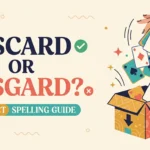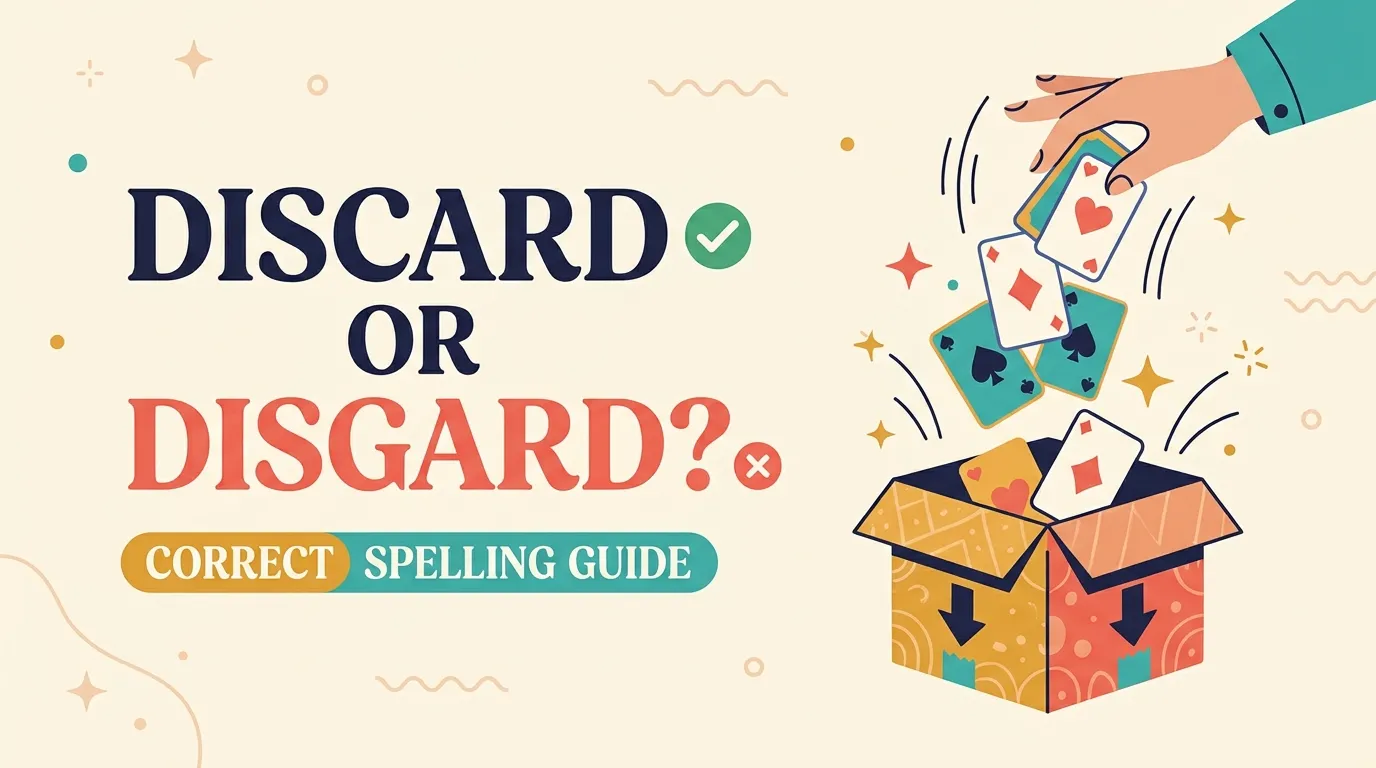
The correct spelling is discard; disgard is a misspelling.
Imagine you are cleaning your room. You find an old box that you no longer need. We decide to throw it away. You might say, “I will discard this box.” But when you type the word, you may wonder if it is discard or disgard. This is a common spelling question because both words look very similar. The correct word is discard. It means to throw something away, remove it, or stop using it. Disgard is not the standard English spelling. People often search for discard or disgard because the sound of the word can make the spelling hard to remember. The letter c in discard may also be easy to miss when writing quickly. Knowing the correct form helps you write clear English in school, work, emails, and daily messages. Once you learn the simple rule, the choice between discard or disgard becomes easy.
Pronunciation
Discard
- US: /dɪˈskɑːrd/
- UK: /dɪˈskɑːd/
Disgard
Disgard is not a standard English word, so it has no standard English pronunciation.
The key point is simple: use discard in standard English.
Read more about: https://suitmean.com/villian-or-villain/
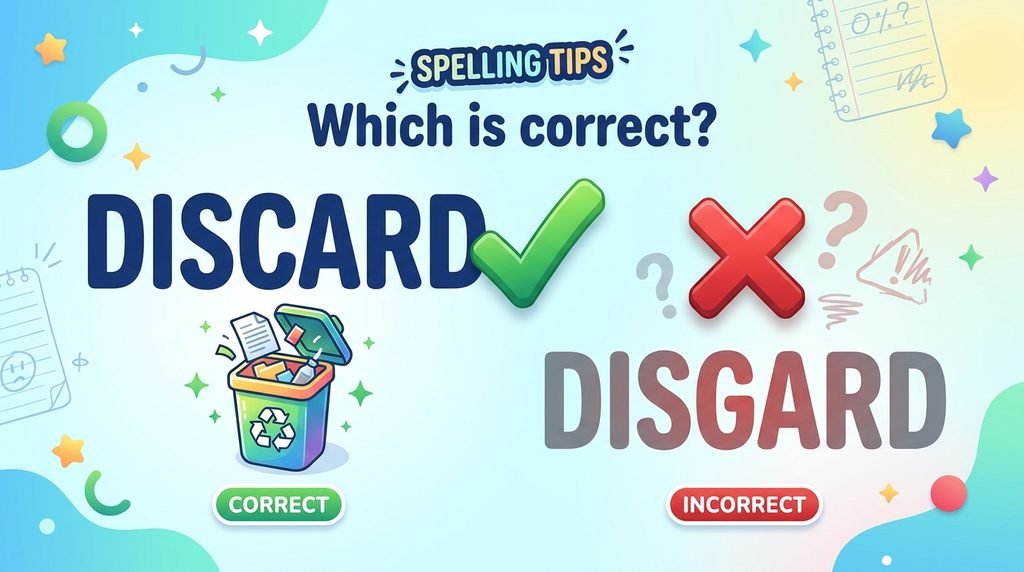
Difference Between Discard or Disgard
1. Correct Spelling
Discard is the correct spelling.
Disgard is a spelling mistake.
Examples:
- Please discard the empty bottle.
- You can discard these old papers.
2. Meaning
Discard has a clear meaning. It means to throw something away or stop using it.
Disgard has no standard dictionary meaning in normal English.
Examples:
- She discarded her old shoes.
- He discarded the broken toy.
3. Dictionary Use
You can find discard in standard English dictionaries.
You will not normally find disgard as a standard English word.
Examples:
- The teacher told us to discard the wrong answer.
- We should discard damaged food.
4. Verb Form
Discard is a verb.
It can describe the act of getting rid of something.
Examples:
- Please discard the wrapper.
- They discarded the old plan.
5. Noun Form
Discard can also be used as a noun.
A discard can mean something that has been thrown away or rejected.
Examples:
- The broken chair became a discard.
- The shop removed several discards.
6. Past Tense
The past form of discard is discarded.
Do not write disgarded.
Examples:
- She discarded the old letter.
- He discarded the empty box.
7. Present Participle
The -ing form is discarding.
It is not disgarding.
Examples:
- We are discarding old files.
- They are discarding damaged goods.
8. Formal Writing
Discard is correct in formal writing.
It can appear in school work, business writing, reports, and instructions.
Examples:
- Please discard all unused forms.
- The company decided to discard the old system.
9. Everyday Speech
People also use discard in normal daily speech.
It is useful when talking about things we no longer need.
Examples:
- I will discard these old clothes.
- You can discard that note.
10. Spelling Choice
When you mean “throw away” or “get rid of,” choose discard.
Never use disgard in standard English.
Examples:
- Correct: Please discard the box.
- Wrong: Please disgard the box.
Nature and Behaviour of Discard or Disgard
Nature of Discard
Discard is a real English word. It is mainly used as a verb.
It means to throw something away, remove it, or reject it.
For example:
- Discard the empty can.
- She discarded the old idea.
It can also describe rejecting something that is not useful.
Nature of Disgard
Disgard is not a standard English word.
It usually appears because someone has misspelled discard.
For example:
- ❌ Please disgard this paper.
- ✅ Please discard this paper.
Why People Get Confused About Discard or Disgard
The two spellings look very close.
The main problem is the letter c.
People may hear the word and remember the sound without remembering the spelling. They may then write disgard instead of discard.
Another reason is that English has many words with g, such as:
- regard
- guard
- garden
This can make disgard look possible.
But discard is the correct spelling.
A useful way to remember it is:
dis + card = discard
Think of a card that you throw away.
Comparison Table
| Feature | Discard | Disgard |
|---|---|---|
| Spelling | Correct | Incorrect |
| Meaning | Throw away or reject | No standard meaning |
| Part of speech | Verb | Not a standard word for this meaning |
| Dictionary use | Standard English | Misspelling |
| Past tense | Discarded | No standard form |
| Present form | Discards | No standard form |
| -ing form | Discarding | No standard form |
| School writing | Use it | Avoid it |
| Formal writing | Correct | Incorrect |
| Global English | Accepted | Not accepted as the intended word |
The Origin of Discard
The word discard comes from older English and French usage.
It is linked to the idea of throwing away a card in a card game. The word later developed a wider meaning.
Today, discard does not only relate to cards.
It can mean getting rid of many things, such as:
- old clothes
- broken tools
- unwanted files
- bad ideas
- unused items
The word has kept the main idea of removing something that is no longer wanted or useful.
British vs American English
There is no major spelling difference between British and American English for discard.
Both use:
discard
Both also use:
discarded
and
discarding
Examples:
- US: Please discard the old file.
- UK: Please discard the old file.
The spelling disgard is not the normal British or American spelling.
So learners in the US, UK, Canada, Australia, India, Pakistan, and other English-speaking regions should use discard.
Which One Should You Use?
Use discard whenever you mean “throw away,” “remove,” or “reject.”
For US English, use discard.
In UK English, use discard.
For global English, use discard.
Avoid disgard in school work, emails, reports, websites, and formal documents.
A simple rule is:
If you mean throw away, write discard.
Common Mistakes
Mistake 1: Using Disgard
❌ I will disgard this box.
✅ I will discard this box.
Mistake 2: Writing Disgarded
❌ The old papers were disgarded.
✅ The old papers were discarded.
Mistake 3: Writing Disgarding
❌ We are disgarding the files.
✅ We are discarding the files.
Mistake 4: Using Disgard in Formal Work
❌ Please disgard the old form.
✅ Please discard the old form.
Mistake 5: Thinking Both Spellings Are Correct
❌ Discard and disgard are two spellings of the same word.
✅ Discard is the standard spelling. Disgard is a misspelling.
Everyday Usage Examples
In an Email
Please discard the old document and use the new version.
On Social Media
I finally cleaned my desk and discarded a lot of old papers.
In the News
The company decided to discard its old plan.
In Formal Writing
The researchers discarded the results that did not meet the required standard.
At Home
Please discard the empty box.
At School
Discard any paper that has the wrong answer.
Usage Trends
Discard is a normal English word used in many settings.
You may see it in:
- business
- education
- technology
- science
- news
- sports
- daily conversation
It is especially common when people talk about removing something that is no longer useful.
Disgard usually appears as a spelling error.
It may occur in casual online writing, search queries, comments, or messages. However, this does not make it a correct spelling.
Metaphors and Similes
Discard can also be used in a figurative way.
It does not always mean throwing a physical object into a bin.
Example 1
She discarded her old fears.
Here, she did not throw fears into a bin. She let them go.
Example 2
The team discarded its old plan.
The team stopped using the plan.
Example 3
He discarded the idea like an old piece of paper.
This compares an unwanted idea to something thrown away.
Connotative Meaning
Discard is usually neutral, but its feeling can change with the situation.
Neutral Meaning
Please discard the empty bottle.
This is a simple instruction.
Negative Meaning
He discarded his friend’s advice.
This may suggest that he did not value the advice.
Positive Meaning
She discarded her bad habits.
This can suggest a useful change.
So, discard can sound positive, negative, or neutral depending on what is being removed.
Idioms and Proverbs
There is no very common English proverb that specifically uses discard.
However, the word can appear in useful expressions.
Discard an Idea
The team discarded the idea after finding a better one.
Discard Old Habits
He discarded his old habits and started a healthier routine.
Discard the Evidence
The computer program may discard unwanted data.
These phrases show how discard can be used with both physical and abstract things.
Literature and Movies
The word discard is common in English literature because writers often describe people rejecting ideas, plans, objects, or relationships.
It can appear in novels, short stories, drama, and poetry.
For example, writers may use it in a story about a person who discards an old belief and chooses a new path.
The word also appears in film dialogue and subtitles. Movies from English-speaking countries, including the United States and United Kingdom, may use discard when a character talks about removing an object or rejecting a plan.
A famous example of the idea can be found in stories about lost objects, unwanted plans, or characters leaving their old lives behind.
The exact meaning always depends on the sentence and the story.
Why This Difference Matters
Knowing the difference matters because spelling can change how clear your writing looks.
Discard is the correct word.
Disgard is a spelling error.
This small difference can matter in:
- school assignments
- exams
- emails
- job applications
- reports
- websites
- business messages
Correct spelling also helps readers trust your writing.
When learners know the correct form, they can write with more confidence.
This is also useful for teachers, writers, editors, and people who use English at work.
Usefulness in Daily Life
You can use discard in many daily situations.
You might:
- discard old clothes
- discard empty bottles
- discard broken toys
- discard old files
- discard unwanted emails
- discard bad ideas
- discard an old plan
- discard spoiled food
For example:
I need to discard these old papers.
Or:
The shop discarded the damaged products.
The word is simple and useful once you remember its spelling.
Situational Preference
Use discard in every standard English situation when you mean to throw away, remove, or reject something. Use it in school writing, work emails, reports, news writing, and daily messages. The word works in both American and British English. Disgard should not be chosen as an alternative spelling. It is normally just a spelling mistake. If you are unsure, remember the spelling as dis + card. This can help you remember the letter c. In simple writing, you can sometimes use words such as “throw away” or “get rid of,” but discard is useful when you want a short and clear word.
Common Questions
Is discard the correct spelling?
Yes. Discard is the correct standard English spelling.
Is disgard a word?
No. Disgard is not a standard English word. It is usually a misspelling of discard.
What does discard mean?
Discard means to throw away, remove, or reject something.
What is the past tense of discard?
The past tense is discarded.
Example:
She discarded the old papers.
What is the -ing form of discard?
The -ing form is discarding.
Example:
He is discarding the broken tools.
Is discard used in British English?
Yes. Discard is used in both British and American English.
How can I remember the spelling of discard?
Think of the word as dis + card. This can help you remember the c in discard.
Conclusion
The choice is simple: discard is the correct spelling, while disgard is a misspelling. Discard means to throw something away, remove it, or reject it. You can use it for physical things, such as old papers and broken items. You can also use it for ideas, plans, habits, and other things you no longer want. The word works in both British and American English. Its forms are easy to remember: discard, discarded, and discarding. The incorrect forms disgard, disgarded, and disgarding should be avoided. If you often confuse these spellings, remember one simple idea: dis + card = discard. This small memory trick can help you keep the letter c in the right place. Once you remember this, the discard or disgard question becomes much easier. Use discard in your school work, emails, reports, and everyday English.

I’m Sultan Sikander, an English language specialist, SEO specialist, digital publisher, and researcher. I create clear, accurate, and well-researched content on English grammar, vocabulary, word meanings, and language comparisons, helping readers understand and use English with confidence.