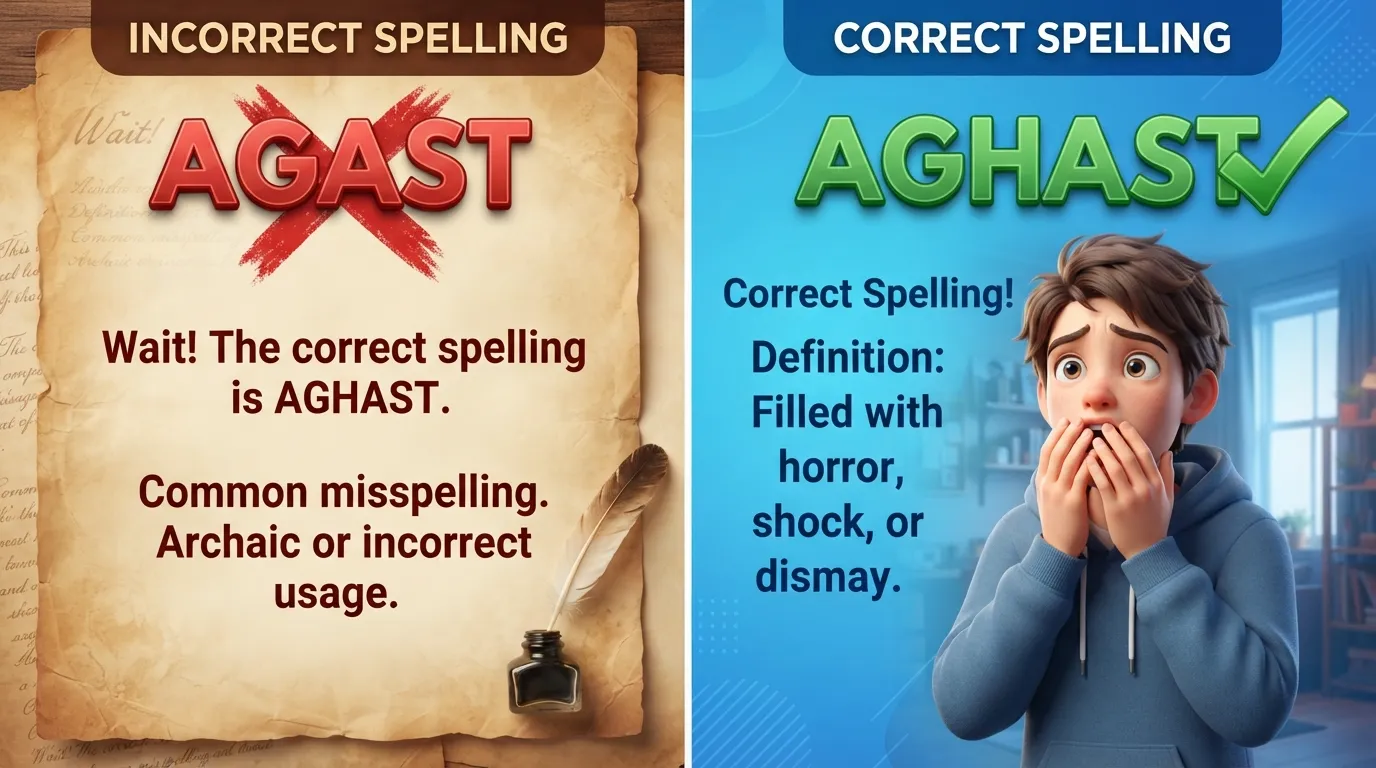
“Aghast” is the correct English word. “Agast” is usually a misspelling of “aghast.”
Have you ever seen something so shocking that you could not speak for a moment? Imagine walking into your room and finding that your favorite vase has broken. You might stand there with wide eyes and a shocked face. This feeling explained as aghast. Many English learners search for “agast or aghast” because both spellings sound almost the same. However, only one is the standard English word. Aghast means shocked, frightened, or filled with horror. Agast is not accepted as the write English spelling. People often make this mistake because the letter “h” in aghast is silent. This makes it easy to leave the letter out when writing. Learning the difference between agast or aghast can help students, writers, and English learners avoid spelling errors in daily communication.
In this article, we will explore the meaning, pronunciation, history, usage, and common mistakes related to agast or aghast.
Pronunciation of Agast and Aghast
Aghast Pronunciation
- US English: /əˈɡæst/
- UK English: /əˈɡɑːst/
The first sound is weak, like “uh.” The letter h is silent.
Agast Pronunciation
“Agast” is not a standard English word. It is usually intended to be aghast, so it is pronounced the same way when used as a misspelling.
Read more about, https://suitmean.com/wp-admin/post.php?post=254&action=edit
A Short Linking Hook
Now that we know the correct spelling, let us look at ten simple differences between agast and aghast.
Difference Between Agast and Aghast
1. Correct Spelling
Aghast: This is the correct spelling of the English word.
Example 1: She was aghast at the terrible news.
Example 2: He stood aghast after seeing the accident.
Agast: This spelling is usually incorrect in modern English.
Example 1: She was agast at the news. (Incorrect)
Example 2: He looked agast. (Incorrect)
2. Dictionary Status
Aghast: It appears in standard English dictionaries.
Example 1: The dictionary defines aghast as shocked or horrified.
Example 2: Students can find aghast in English vocabulary books.
Agast: It is not normally listed as the correct modern English word.
Example 1: A spelling checker may mark agast as an error.
Example 2: Teachers usually correct agast to aghast.
3. Meaning
Aghast: Means extremely shocked, frightened, or horrified.
Example 1: The mother was aghast when she heard the news.
Example 2: Everyone was aghast at the sudden fire.
Agast: Has no accepted standard meaning in modern English.
Example 1: Agast does not correctly describe a feeling of shock.
Example 2: Use aghast instead when describing horror or surprise.
4. Use in Sentences
Aghast: Can be used in formal and informal writing.
Example 1: The teacher was aghast at the students’ behavior.
Example 2: I was aghast when I saw the broken window.
Agast: Should not be used in standard English sentences.
Example 1: Avoid writing “I am agast.”
Example 2: Write “I am aghast” instead.
5. Silent Letter
Aghast: Contains the silent letter “h.”
Example 1: The h is not pronounced in aghast.
Example 2: The word sounds like “uh-gast.”
Agast: Removes the silent letter.
Example 1: Some people spell the word by sound and write agast.
Example 2: This spelling mistake happens because h cannot be heard.
6. Formal Writing
Aghast: Is acceptable in formal writing.
Example 1: The committee was aghast at the unexpected results.
Example 2: The readers were aghast at the shocking report.
Agast: Is not suitable for formal English.
Example 1: Do not use agast in academic essays.
Example 2: Avoid agast in business reports.
7. Emotional Expression
Aghast: Describes a strong emotional reaction.
Example 1: She looked aghast after hearing the truth.
Example 2: He was aghast at the amount of damage.
Agast: Does not correctly express this emotion.
Example 1: “He was agast” is incorrect.
Example 2: “He was aghast” is the correct form.
8. Grammar and Word Type
Aghast: Is mainly used as an adjective.
Example 1: The aghast woman could not speak.
Example 2: The audience looked aghast.
Agast: Is not recognized as a standard adjective.
Example 1: It should not be used as a normal English describing word.
Example 2: Replace agast with aghast.
9. Search Results and Online Writing
Aghast: Is the spelling used in books, newspapers, and websites.
Example 1: News writers may describe people as aghast after a disaster.
Example 2: Authors often use aghast in emotional scenes.
Agast: Often appears because of spelling mistakes.
Example 1: A person may type agast while searching online.
Example 2: Search engines often suggest the correct spelling, aghast.
10. Correct Choice for Learners
Aghast: This is the word learners should remember.
Example 1: Learn one correct spelling: aghast.
Example 2: Use aghast in your English homework.
Agast: Should be avoided in standard English.
Example 1: Do not memorize agast as a vocabulary word.
Example 2: Correct it whenever you see this spelling mistake.
Nature and Behaviour of Agast and Aghast
Nature of Aghast
Aghast is an adjective. It describes a person’s emotional state.
It shows:
- Shock
- Fear
- Horror
- Extreme surprise
Example: The boy was aghast when he saw the snake.
The word is usually connected with something sudden or unpleasant.
Nature of Agast
Agast does not have a recognized modern meaning in standard English. It is usually a spelling error.
It should not be treated as a separate vocabulary word.
Why People Get Confused About Agast and Aghast
People confuse these words mainly because of pronunciation.
The letter “h” in aghast is silent. When people hear the word, they may spell it as agast.
Another reason is that English contains many silent letters. Words like honest, hour, and heir also have silent letters.
The best way to avoid this mistake is to remember:
Aghast = correct spelling.
Comparison Table
| Feature | Agast | Aghast |
| Correct spelling | No | Yes |
| Standard English word | No | Yes |
| Meaning | No accepted modern meaning | Shocked or horrified |
| Part of speech | Not standard | Adjective |
| Silent letter | No | H is silent |
| Formal usage | Incorrect | Correct |
| Dictionary presence | Usually not accepted | Yes |
| Example | Incorrect spelling | She was aghast |
| Usage | Avoid | Recommended |
| Similarity | Often confused with aghast | Correct form of the word |
Similarities
Although agast and aghast are different in correctness, they are often connected because:
- They look similar.
- They sound similar when spoken.
- People may use agast when they mean aghast.
- Both are searched together by English learners.
The Origin of Aghast
The word aghast has an interesting history.
It comes from Middle English and Old English roots connected with fear, terror, and being frightened.
The word has been used in English literature for hundreds of years. Earlier forms of the word were linked to being terrified or struck with fear.
Over time, aghast became a common adjective used to describe extreme shock or horror.
The spelling remained with the silent “h,” which is one reason modern learners sometimes misspell it.
British vs American English
There is no major spelling difference between British and American English for this word.
Both use:
Aghast
Examples in American English:
- She was aghast at the news.
- The crowd looked aghast.
Examples in British English:
- He was aghast at the shocking event.
- The audience stood aghast.
The pronunciation may vary slightly between American and British speakers, but the spelling remains the same.
Which One Should You Use?
Always use aghast in standard English.
For American English
Use aghast in school, work, emails, and conversations.
For British English
Use aghast in exactly the same way.
For Global English
Aghast is understood across most English-speaking countries.
Avoid agast unless you are discussing a spelling mistake itself.
Common Mistakes
Here are some common errors and their corrections.
| Incorrect | Correct |
| I was agast at the news. | I was aghast at the news. |
| She looked agast. | She looked aghast. |
| He felt agast after the accident. | He felt aghast after the accident. |
| The audience was agast. | The audience was aghast. |
| They stood agast in silence. | They stood aghast in silence. |
Common Error
Do not pronounce or write the silent “h” based on sound.
Remember that correct spelling does not always match pronunciation.
Everyday Usage Examples
In Emails
I was aghast to hear about the sudden changes in the company.
On Social Media
I am absolutely aghast at what happened today!
In News Writing
Residents were aghast after the unexpected storm damaged their homes.
In Formal Writing
The researchers were aghast at the serious environmental damage.
In Daily Conversation
I was aghast when I saw the price of the repair.
Usage Trends
Aghast remains a recognized English word, but it is more common in formal writing, news reports, books, and dramatic descriptions than in casual speech.
In everyday conversation, people often use simpler words such as:
- Shocked
- Surprised
- Horrified
- Stunned
- Amazed
For example:
Instead of saying:
“I was aghast at the news.”
Many people simply say:
“I was shocked by the news.”
Still, aghast is useful when you want to express a very strong emotional reaction.
Metaphors and Similes
Aghast is sometimes used in figurative language to make writing more powerful.
Metaphor Examples
- The city stood aghast after the disaster.
- The classroom was aghast at the shocking announcement.
These sentences give a human emotion to a group or place.
Simile Examples
- He looked aghast like someone who had seen a ghost.
- She stood aghast like a statue frozen in fear.
These comparisons help readers imagine the emotion clearly.
Connotative Meaning
Aghast usually has a negative emotional meaning.
Negative Meaning
It often suggests fear, horror, or shock.
Example: The villagers were aghast after the earthquake.
Positive Meaning
Aghast is rarely used with a positive meaning.
However, extreme surprise can sometimes be neutral depending on context.
Example: She was aghast at the unexpected amount of money she had won.
Neutral Meaning
The word mainly describes emotional shock without always showing whether the event is good or bad.
Idioms and Proverbs
There are no major common idioms that use the exact word “aghast.”
However, similar expressions include:
- Scared stiff
- Shocked to the core
- Lost for words
- Frozen in fear
Examples:
- She was scared stiff after hearing the strange noise.
- He was lost for words when he saw the surprise.
These expressions can sometimes replace aghast in casual English.
Literature and Movies
Literature
Aghast is commonly found in classic English literature, especially in:
- Gothic fiction
- Horror stories
- Victorian literature
- Dramatic novels
Writers often use the word to describe characters facing fear, danger, or shocking events.
For example, Gothic writers such as Edgar Allan Poe used emotional words like aghast to create suspense and horror.
Movies
The word aghast is often used in movie dialogue and subtitles, especially in horror, drama, and mystery films.
Examples of genres where aghast fits naturally include:
- Horror
- Mystery
- Historical drama
- Thriller
A character may stand aghast after discovering a frightening secret.
Why This Difference Matters
Knowing the difference between agast and aghast matters because correct spelling improves communication.
For learners, it helps build confidence in English writing.
This helps explain silent letters and pronunciation rules for teachers.
Professionals, correct spelling makes emails, reports, and documents look more polished.
In society, clear communication is important. A small spelling mistake can sometimes change the meaning or make writing look careless.
Learning one correct word at a time helps people become better readers and writers.
Usefulness in Daily Life
You may use aghast when:
- Writing a story
- Describing a shocking event
- Writing a news report
- Expressing strong surprise
- Reading literature
- Creating dramatic social media posts
Example:
“Everyone was aghast when the team lost the final match.”
This sentence clearly shows strong surprise and disappointment.
Situational Preference
The word aghast is best for strong emotional situations. Use it when someone feels shocked, horrified, or deeply surprised. It works well in stories, news reports, formal writing, and dramatic conversations. In casual daily speech, simpler words like shocked or surprised may sound more natural. Never use agast as an alternative spelling. Whether you write American or British English, aghast is the correct choice. If you are unsure, remember that the silent letter “h” belongs in the word. Choosing the correct spelling makes your writing clear and professional.
Common Questions,
Is agast a correct English word?
No. Agast is generally considered a misspelling of aghast.
What does aghast mean?
Aghast means extremely shocked, frightened, or horrified.
How do you pronounce aghast?
Aghast is pronounced /əˈɡæst/ in American English and /əˈɡɑːst/ in British English.
Is the h silent in aghast?
Yes. The letter h is silent.
Can I use aghast in formal writing?
Yes. Aghast is a standard English adjective suitable for formal writing.
Is aghast used in American English?
Yes. Aghast is used in both American and British English.
What is another word for aghast?
Common alternatives include shocked, horrified, stunned, frightened, and amazed.
Conclusion
The difference between agast and aghast is simple. Aghast is the correct English word, while agast is usually a spelling mistake. Aghast describes a strong feeling of shock, fear, horror, or surprise. It is an adjective and can be used in stories, news reports, formal writing, and everyday descriptions. People often confuse these spellings because the letter “h” in aghast is silent. However, pronunciation should not always guide spelling in English. Whether you use American or British English, the correct spelling remains the same: aghast.
Remember this easy rule:
Aghast = correct. Agast = incorrect in standard English.
Learning this small difference can improve your spelling, writing, and confidence. The next time you want to describe someone who is deeply shocked, use aghast with confidence.

I’m Sultan Sikander, an English language specialist, SEO specialist, digital publisher, and researcher. I create clear, accurate, and well-researched content on English grammar, vocabulary, word meanings, and language comparisons, helping readers understand and use English with confidence.