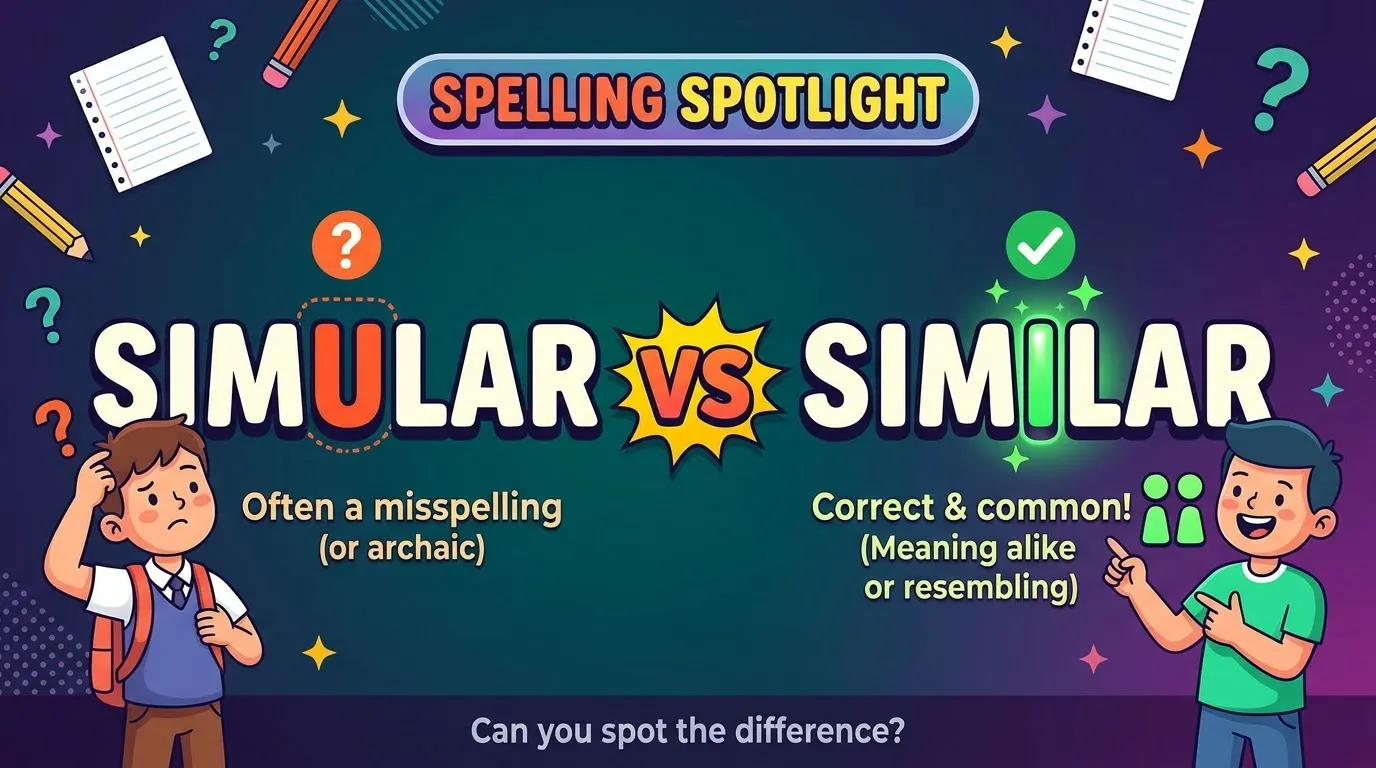
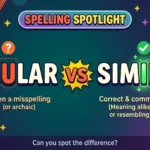
The correct spelling is similar. The word simular is a common spelling mistake.
Have you ever written a school essay, an email, or a social media post and felt unsure about a word? Many people face this problem with simular or similar. The two spellings look almost the same. One small letter makes the difference. Similar means almost the same, but not exactly the same. We use it to talk about people, things, ideas, colors, and actions that share some features. For example, two shirts can have similar colors. Two friends can have similar hobbies. Simular is not the standard spelling of this word in modern English. You should use similar in schoolwork, business emails, reports, and daily chats.
People search for simular or similar because the letter i and the letter u can cause spelling mistakes. Some people may also type the wrong word when they write fast. Learning the correct spelling helps you write with care and share your ideas clearly.
The rule is easy to learn: use similar when you mean “almost the same.” Remember this spelling, and you can avoid this common error in your writing.
Pronunciation
- Similar — US English: /ˈsɪmələr/
- Similar — UK English: /ˈsɪmɪlə/
- Simular: This is not the standard spelling, so it has no standard English pronunciation for this meaning.
The correct word has three syllables. Speakers may say it a little differently in different places.
Let’s look at the main differences and learn how to use the correct word.
See more about:https://suitmean.com/wp-admin/post.php?post=461&action=edit
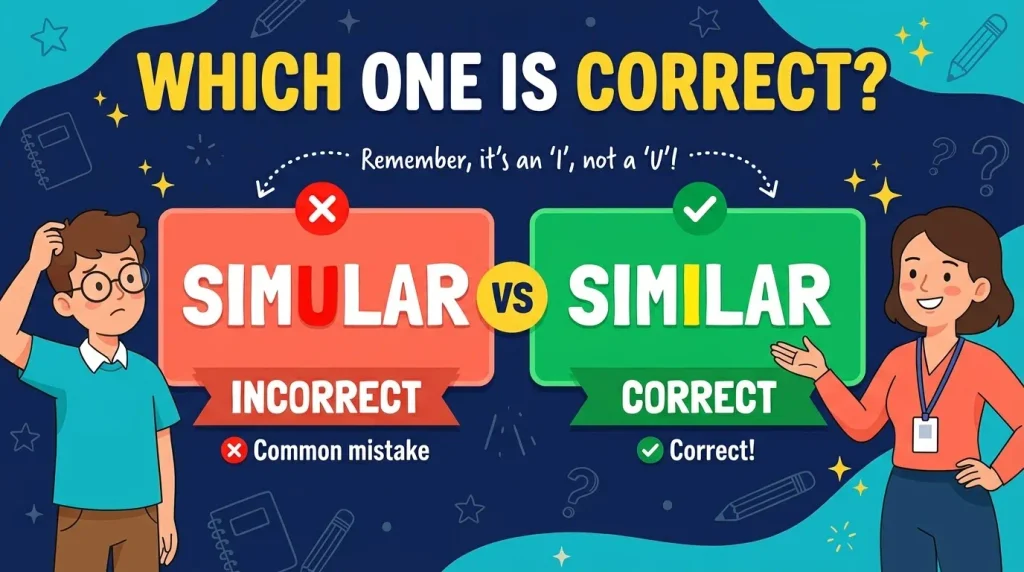
Difference Between Simular or Similar
1. Correct Spelling
Similar is the correct spelling. Simular is a spelling error when you mean “almost the same.”
- Correct: These bags look similar.
- Incorrect: These bags look simular.
2. Meaning
Similar means that two or more things share some features. Simular has no standard meaning as a common English word for this idea.
- My shoes are similar to yours.
- The two pictures look similar.
3. Grammar
Similar is an adjective. It tells us how people or things are alike.
- We have similar ideas.
- They bought similar phones.
4. Use in Sentences
Use similar to compare two or more things.
- My answer is similar to yours.
- This room is similar to my old room.
5. School Writing
Students should use similar in homework, tests, and essays.
- The two stories have similar endings.
- These words have similar meanings.
6. Business Writing
Workers use similar to compare plans, tasks, and products.
- We offer similar services.
- The two plans have similar costs.
7. Daily Speech
People use similar in normal talks with friends and family.
- Our tastes are similar.
- These cups look similar.
8. Online Writing
Use similar in posts, comments, and messages.
- I had a similar problem.
- We like similar songs.
9. Word Forms
Similar also has other forms, such as similarly and similarity. The misspelling simular is not the standard base word for these forms.
- Both teams play similarly.
- There is a strong similarity between the pictures.
10. Reader Understanding
The correct spelling helps readers understand your message. The wrong spelling may distract them.
- We have similar goals.
- Both plans have similar results.
In each example, similar is the word you should use.
Nature and Behaviour of Simular and Similar
Nature of Similar
Similar is an adjective. It shows that two or more things share some features. They do not need to be exactly the same.
Examples:
- The twins have similar faces.
- We chose similar gifts.
- Their views are similar.
Nature of Simular
Simular is not the standard English spelling for this meaning. You should not use it in normal English writing.
Examples:
- Incorrect: We have simular plans.
- Correct: We have similar plans.
Why People Get Confused About Simular and Similar
These words look almost the same, so people often spell them wrong.They differ by just one letter.
Here are the main reasons:
- Fast typing: People may type u instead of i.
- Memory errors: Some writers remember the sound but forget the spelling.
- Word guessing: Writers may guess how a word looks.
- Lack of practice: New learners may not know the correct form.
- Spell-check errors: Some tools may miss a mistake or fail to suggest the right word.
The best way to avoid this error is to learn the correct spelling and use it often.
Comparison Table
| Feature | Simular | Similar |
| Spelling | Incorrect for this meaning | Correct |
| Meaning | No standard meaning in this use | Almost the same |
| Word type | Not the correct form | Adjective |
| Grammar use | Avoid it | Use it |
| Schoolwork | Incorrect | Correct |
| Emails | Avoid it | Correct |
| Daily speech | Not standard | Common |
| Formal writing | Incorrect for this meaning | Accepted |
| Related word | Not the standard base | Similarity |
| Best choice | No | Yes |
Similarities Between the Two Spellings
Both spellings look alike.
People may use both spellings when they mean “almost the same.” The correct spelling is similar.
The Origin of Similar
The word similar came into English through French and Latin. It is linked to the Latin word similis, which means “like” or “alike.”
Over time, English speakers used similar to describe things that share features. Today, the word appears in daily speech, books, schoolwork, science, and business.
The spelling simular is not the standard form of this English word. It often appears because of typing or spelling errors.
British vs American English
British and American English use the same spelling: similar.
| Feature | British English | American English |
| Correct spelling | Similar | Similar |
| Meaning | Almost the same | Almost the same |
| Grammar | Similar to | Similar to |
| Daily use | Common | Common |
| Formal writing | Similar | Similar |
Examples in British English:
- These two houses are similar.
- Her coat is similar to mine.
Examples in American English:
- The two cars look similar.
- My answer is similar to yours.
There is no British and American spelling difference here. Both forms use similar.
Which One Should You Use?
Use similar in every type of English writing.
- US English: Write similar.
- UK English: Write similar.
- Global English: Write similar.
This rule also applies to English used in Pakistan, India, Canada, Australia, and New Zealand.
Use similar to mean “almost the same.” Check a good dictionary if you are not sure about the spelling.
Common Mistakes
Here are common errors and their corrections.
| Incorrect | Correct |
| Simular words | Similar words |
| Simular colors | Similar colors |
| A simular problem | A similar problem |
| They are simular | They are similar |
| Simular to mine | Similar to mine |
| Simular ideas | Similar ideas |
| Simular results | Similar results |
| Simular products | Similar products |
Easy tip: Remember the letter i in similar. Write the word a few times to help you learn it.
Everyday Usage Examples
1. In Emails
Similar Project PlansSimilar Project Plans
Hello Team,
I reviewed both project plans. They have similar goals, but the costs are different.
Best regards, Alex
2. On Social Media
- These two outfits look similar!
- I had a similar experience last week.
- We have similar tastes in music.
3. In News
- The two towns face similar problems.
- The new plan has similar goals to the old one.
4. In Formal Writing
- The study found similar results in both groups.
- Both reports describe similar risks.
- The two methods have similar features.
5. In Schoolwork
- A square and a rectangle have some similar features.
- The two stories have similar themes.
- These words have similar meanings.
Usage Trends
Similar is a common word in modern English. People use it in many countries and in many types of writing.
You can find it in school lessons, news reports, online posts, business plans, and everyday talks. People use it when they compare things or explain how ideas are alike.
Simular is not the standard spelling for this meaning. It may appear in online text because of typing errors or weak spelling skills. Its appearance does not make it correct.
There is no need to choose between British and American forms. Both use similar. For clear writing, use the correct spelling every time.
Metaphors and Similes
The word similar can help us explain ideas through comparisons.
A simile compares two things using words such as like or as. A metaphor says that one thing is another to show a shared feature.
Examples:
- Simile: Her voice is like a soft song.
- Simile: The two brothers are as brave as lions.
- Metaphor: Their minds are two open books.
- Simple comparison: Our dreams are similar.
These examples show how comparisons help people share ideas. The word similar tells us that things share some features.
Connotative Meaning
A word’s connotative meaning is the feeling or idea it brings to mind. The word similar can have positive, negative, or neutral meanings based on the sentence.
Positive Meaning
It can show a bond or a shared goal.
- We have similar dreams.
- The friends share similar values.
Negative Meaning
It can suggest a lack of change or new ideas.
- All the films have similar plots.
- The two designs look too similar.
Neutral Meaning
It can state a simple fact.
- The two bags have similar sizes.
- Both tests have similar questions.
The word itself is neutral. The sentence gives it a positive or negative feeling.
Idioms and Proverbs
There is no common English idiom or proverb built around the exact word similar. However, several common sayings express the idea of being alike.
– Like two peas in a pod: Two people or things look very much alike. The twins are like two peas in a pod.
– Birds of a feather flock together: People with similar interests often spend time together. The two book lovers became friends because birds of a feather flock together.
– Great minds think alike: Two people may have the same idea. We both chose the same plan. Great minds think alike!
These sayings help us talk about people, ideas, and things that share features.
Literature and Movies
Writers and filmmakers often compare people, places, and ideas. The word similar can help them explain these links.
Literature
Add to Favorites
Pride and Prejudice
Jane Austen · 1813 · Novel
The novel explores love, family, class, and social views. Readers can compare the characters’ ideas and choices.
Add to Favorites
Little Women
Louisa May Alcott · 1868 · Novel
The story follows four sisters. Their lives have similar family roots, but each sister has her own dreams and traits.
Movies
Add to Favorites
The Parent Trap
1998 · United States · Family comedy
The film follows twin sisters who look alike and share many traits. It offers a clear example of similar people with different lives.
Add to Favorites
Finding Nemo
2003 · United States · Animated adventure
The story shows family love, courage, and friendship. Viewers can compare characters who share some traits but act in different ways.
These works show how comparison can help us understand characters and stories. The examples explain the idea of similarity; they do not claim that the word appears in every title or scene.
Why This Difference Matters
Learning the correct spelling helps students, workers, and other writers.
- For students: It helps them write correct answers and essays.
- For teachers: It helps them explain word meanings clearly.
- For workers: It makes emails and reports easier to read.
- For readers: It helps them understand a message without confusion.
- For society: Clear writing helps people share facts and ideas.
A small spelling error may not change the main idea, but it can make writing look less careful. Learning similar helps you avoid that error.
Usefulness in Daily Life
We use the word similar in many daily tasks.
- Shopping: These two shirts have similar colors.
- School: The questions have similar answers.
- Work: Both plans have similar goals.
- Travel: These hotels offer similar services.
- Family: The children have similar hobbies.
- Technology: These phones have similar features.
The word helps us compare things without saying they are exactly the same.
Situational Preference
Use similar in all normal situations. In schoolwork, it helps you compare ideas, stories, and facts. In business, it helps you discuss plans, costs, and services. For daily talks, it helps you explain how two things are alike. In emails and social media posts, it keeps your message clear. US, UK, and global English all use the same spelling. Do not choose simular for formal or casual writing. It is not the standard spelling for this meaning. When you need to compare two things, choose similar.
FAQs
1. Is simular or similar correct?
Similar is correct. Simular is a spelling error when you mean “almost the same.”
2. What does similar mean?
It means two or more things have some things in common but are not exactly the same.
Example: These two bags look similar.
3. Is simular a real English word?
It is not the standard English word for “almost the same.” Use similar instead.
4. Do British people spell similar differently?
No. British and American English both use similar.
5. How do you use similar in a sentence?
Use it to compare people, things, or ideas.
Example: My sister and I have similar interests.
6. What word forms come from similar?
Common forms include similarly and similarity.
- Similarly: The two teams played similarly.
- Similarity: There is a clear similarity between the pictures.
7. How can I remember the correct spelling?
Remember the letter i in similar. Write the word in a few short sentences to practise it.
Conclusion
The main difference between simular or similar is simple. Similar is the correct spelling when you mean that two or more things are almost the same. Simular is not the standard spelling for this meaning. You can use similar to talk about people, clothes, ideas, plans, colors, and many other things. For example, two friends may have similar hobbies.
Two shops may sell similar products. Two stories may have similar endings. The correct spelling stays the same in British, American, and global English. You do not need to learn two different forms. Just remember to write similar with the letter i after the first s.
Learning this word can improve your schoolwork, emails, reports, and online posts. It can also help you explain your ideas in a clear way. If you ever feel unsure, check a trusted English dictionary. Keep the rule in mind: Similar is correct. Simular is incorrect for this meaning. With a little practice, you can remember the right spelling and avoid this common mistake.
Meta Description
Simular or similar: Learn the correct spelling, meaning, pronunciation, and usage with easy examples. Improve your English and avoid common spelling mistakes.

I’m Sultan Sikander, an English language specialist, SEO specialist, digital publisher, and researcher. I create clear, accurate, and well-researched content on English grammar, vocabulary, word meanings, and language comparisons, helping readers understand and use English with confidence.


2 thoughts on “Simular or Similar: Which Spelling Is Correct?”