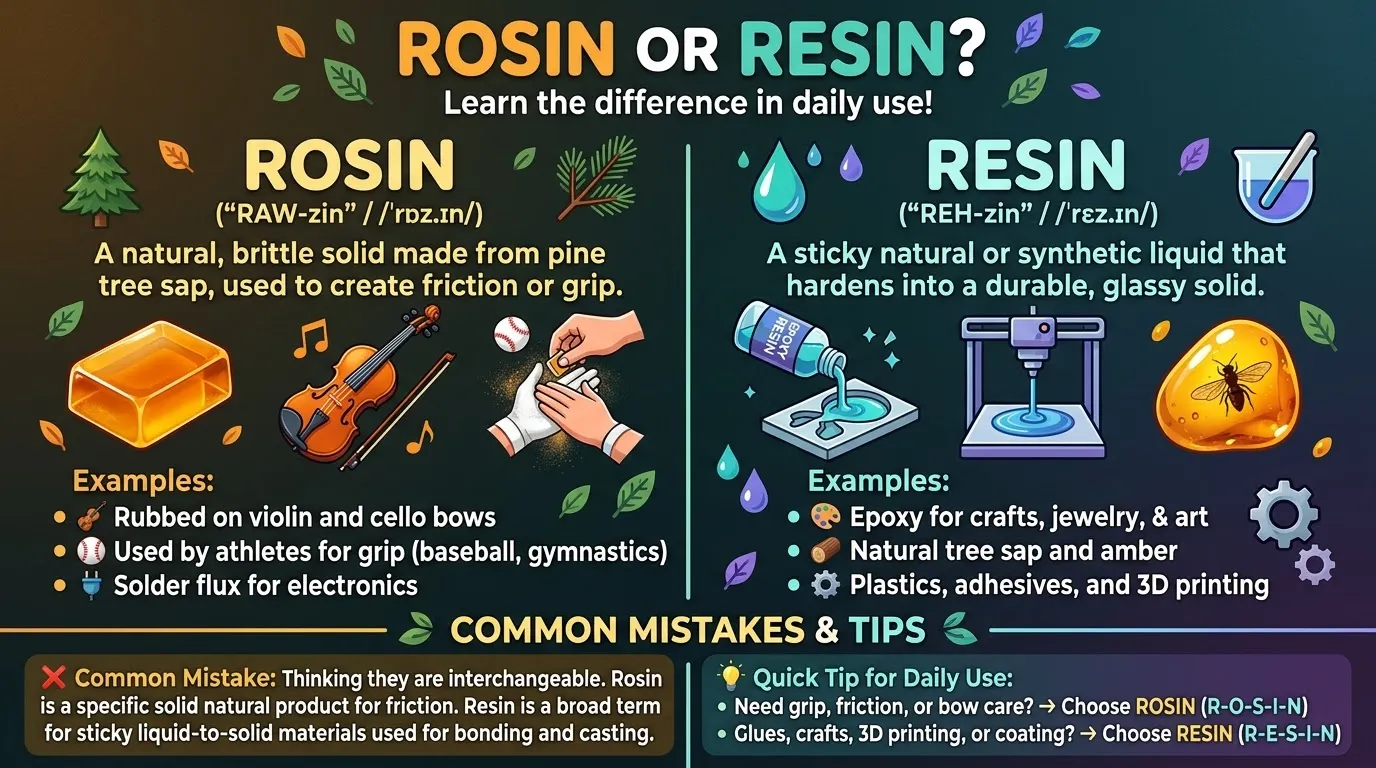
Rosin comes from plant sap or resin, while resin is a sticky substance that plants make or people create.
Imagine you play the violin at school. Your teacher gives you a small block to rub on the bow. The block helps the bow grip the strings and make a clear sound. This block is called rosin. Now imagine a craft worker who uses a clear liquid to make shiny jewelry. The worker may use resin. Both words sound alike, but they have different uses.
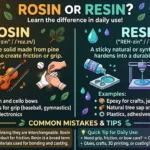
Rosin is a solid or sticky material. People often get it from the resin of pine trees. Musicians use it on bow strings. Athletes also use it to improve their grip. Resin is a broad name for sticky plant materials and many synthetic products. People use it in glue, paint, jewelry, and other items.
People search for rosin or resin because the words look and sound similar. They may also see both words in art, music, science, or craft guides. Knowing the difference helps you choose the right word and product. Rosin often comes from resin, but the two words do not mean the same thing.
Pronunciation
WordUS pronunciationUK pronunciationRosinROZ-inROZ-inResinREZ-inREZ-in
Both words have two syllables. The first sound differs: rosin starts with a “r” sound followed by a vowel like the one in “rose,” while resin starts with the vowel sound in “red.”
Read more about: https://suitmean.com/wp-admin/post.php?post=468&action=edit
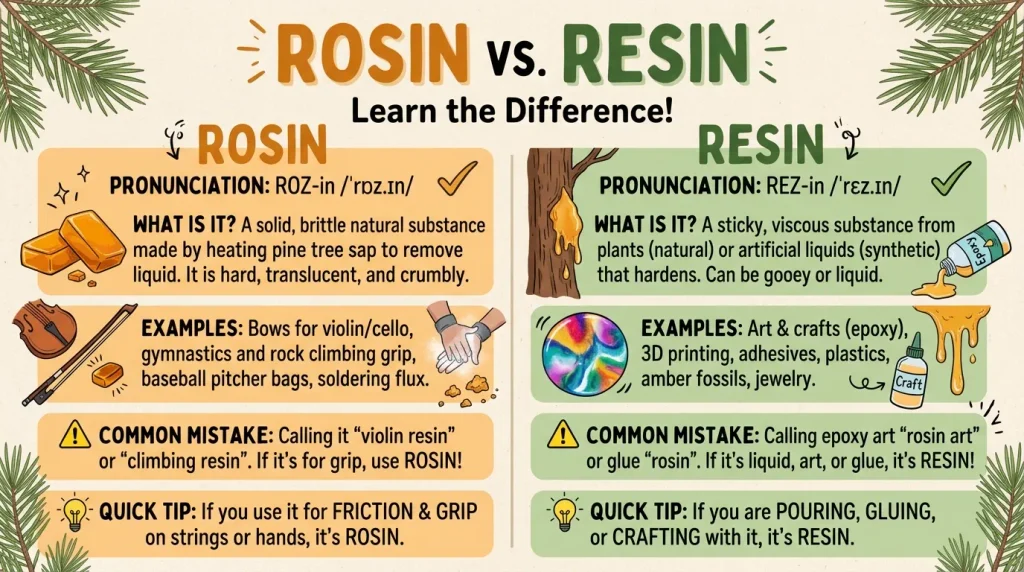
Difference Between Rosin and Resin
1. Meaning
Rosin is a solid material made from plant resin, often from pine trees.
Resin is a sticky substance that may come from plants or be made by people.
- Example 1: The violinist put rosin on the bow.
- Example 2: The artist poured resin into a mold.
2. Source
Rosin often comes from pine tree resin after workers remove some of its liquid parts.
Resin can come from plants, or it can be made from chemicals.
- Example 1: The factory made rosin from pine resin.
- Example 2: The company made a clear resin for crafts.
3. Form
Rosin is usually hard, brittle, or solid.
Resin can be a thick liquid, a soft material, or a hard solid.
- Example 1: She held a small block of rosin.
- Example 2: He poured liquid resin into a tray.
4. Main Use
Rosin helps create grip or friction.
Resin is used to make or cover many things.
- Example 1: The player rubbed rosin on his hands.
- Example 2: The artist used resin to coat a table.
5. Music
Rosin helps a violin or cello bow grip the strings.
Resin is a wider term and does not usually name the block used on a bow.
- Example 1: The violinist added rosin to the bow.
- Example 2: The musician kept the rosin in a small case.
6. Art and Crafts
Rosin has special uses in some art and craft work.
Resin is common in jewelry, models, and shiny art pieces.
- Example 1: The craft worker used rosin in a special process.
- Example 2: She made a resin pendant with flowers.
7. Feel and Texture
Rosin often feels dry and crumbly when it is in a block.
Resin may feel sticky or thick before it hardens.
- Example 1: The rosin broke into small bits.
- Example 2: The resin felt sticky before it set.
8. Natural or Synthetic
Rosin usually comes from natural plant resin.
Resin may be natural or synthetic, which means made by people.
- Example 1: The maker sold pine rosin.
- Example 2: The shop sold synthetic resin for repairs.
9. Use in Sports
Rosin can help some athletes get a better grip on equipment or their hands.
Resin may be used in products made for grip, but the exact use depends on the type.
- Example 1: The pitcher used rosin to help dry his hand.
- Example 2: The factory used resin to make a strong sports part.
10. Best Word to Use
Rosin is the right word for the material used on a violin bow or in other specific rosin products.
Resin is the wider word for natural or synthetic sticky materials.
- Example 1: I need rosin for my violin.
- Example 2: I need resin to make a clear craft pendant.
Nature and Behaviour of Rosin and Resin
Rosin
Rosin is often hard and brittle. It can break into small pieces. Heat can soften it. It can also melt when it gets hot enough.
People use rosin to help a bow grip violin strings. Some sports use it to improve grip. Rosin can also appear in some industrial products.
Examples:
- The violinist rubbed rosin on the bow.
- The rosin broke when it fell on the floor.
Resin
Resin is a broad group of materials. Natural resin may ooze from a tree after the bark gets hurt. Synthetic resin can start as a liquid and harden through a chemical process.
People use different resins for glue, coatings, jewelry, and many other items. Each type has its own features.
Examples:
- Sticky resin came out of the pine tree.
- The craft resin became hard after it cured.
Why People Get Confused About Rosin and Resin
People get confused because the words look alike and sound similar. Both can also relate to sticky plant materials.
The main link is that rosin often comes from plant resin. Makers heat the resin and remove some of its liquid parts to make rosin. The words are related, but they do not name the same thing.
The words also appear in different fields. A musician may talk about rosin. An artist may talk about resin. A science book may use both.
Easy rule: Rosin is a specific material. Resin is a wider term for a group of materials.
The Origin of Rosin and Resin
Rosin
The word rosin has a long history. It came into English through older European words linked to tree resin. People have used rosin for many years in music, crafts, and other work.
Musicians found that rosin helped bow hair grip string surfaces. This grip helps the strings vibrate and make sound. Today, rosin remains a common item for violin and cello players.
Resin
The word resin comes from Latin resina, which refers to resin. People have long used natural resins from trees in varnish, glue, and other products.
Modern science has also made many synthetic resins. These can be used in plastics, coatings, adhesives, and craft materials.
Both words have links to sticky substances. Their uses have grown over time, but they still have different meanings.
Which One Should You Use?
Use the word that matches the material.
- In the US: Use rosin for violin bow material and resin for craft or industrial products.
- In the UK: Follow the same rule. Both words have the same spellings and meanings.
- In global English: Use rosin for the specific material and resin for the wider group of materials.
If you are buying a product, read the label. A violin player usually needs bow rosin. A craft worker may need epoxy resin or another type of craft resin. Do not treat the two words as if they mean the same thing.
Common Mistakes
Here are some common mistakes and their corrections.
1. Wrong: I need resin for my violin bow. Better: I need rosin for my violin bow.
2. Wrong: She poured rosin into a jewelry mold to make a clear pendant. Better: She poured resin into a jewelry mold to make a clear pendant.
3. Wrong: Rosin and resin mean exactly the same thing. Correct: Rosin is a specific material, often made from plant resin.
4. Wrong: All resin comes from trees. Correct: Some resin is natural, and some is artificial.
5. Wrong: Rosin is always a liquid. Correct: Rosin is usually solid.
6. Wrong: Resin is always clear. Correct: Resin can have many colors and forms.
Everyday Usage Examples
Emails
- “Could you please order a new block of rosin for the school violin?”
- “Please buy clear resin for our craft project.”
Social Media
- “New rosin, ready for violin practice!”
- “I made this flower pendant with resin.”
News
- “The player used rosin to help improve his grip.”
- “The company opened a plant that makes resin for industrial use.”
Formal Writing
- “Rosin helps bow hair grip the strings.”
- “The study examined the strength of a cured resin.”
Schoolwork
- “Rosin often comes from pine tree resin.”
- “Some resins harden after a chemical reaction.”
Usage Trends
Both words are used around the world. Their use depends on the topic.
Rosin often appears in music, sports, and some industrial fields. People search for it when they need violin bow care tips or a grip product.
Resin appears in craft guides, science books, building work, and product labels. It is common in searches about jewelry making, repairs, and coatings.
Online shops may use both words in product names. This can cause confusion if a buyer does not know what each material does.
The words are not regional spelling variants. They have different meanings in both British and American English. The best way to choose is to check the product’s purpose.
Metaphors and Similes
Rosin and resin do not have many common idioms. Writers can still use them in creative comparisons.
Metaphors
A metaphor describes one thing as another.
– “The rosin was the key to the violin’s voice.” This means the rosin helped the bow make a clear sound.
– “The resin was a glass coat over the flowers.” This means the resin covered and protected the flowers.
Similes
A simile compares things using like or as.
- “The fresh tree resin was sticky like honey.”
- “The hard rosin broke like a dry piece of chalk.”
These examples use simple images to help readers picture the materials.
Connotative Meaning
A word’s connotation is the feeling or idea it brings to mind. Rosin and resin have mostly neutral meanings, but their use can create different feelings.
Positive Meaning
Both words can suggest skill, art, or useful work.
- “The violinist used rosin to improve the bow’s grip.”
- “The artist made a lovely pendant with resin.”
Negative Meaning
Both words can suggest mess, waste, or a problem when used in the wrong way.
- “Rosin dust covered the music stand.”
- “The resin spilled across the work table.”
Some resins can also cause harm if people do not follow the safety instructions. The risk depends on the type of resin and how someone uses it.
Neutral Meaning
Both words can name a material without showing any feeling.
- “The shop sells rosin.”
- “The factory makes resin.”
Idioms and Proverbs
There are no widely used English idioms or proverbs built around the exact words rosin and resin. They mostly name materials.
You can still use common sayings when you write about music or craft work.
1. Practice Makes Perfect
Meaning: You improve when you practice often.
Example: “She used rosin and practiced her violin each day. Practice makes perfect.”
2. A Sticky Situation
Meaning: A hard or tricky problem.
Example: “The spilled resin left him in a sticky situation.”
This phrase is an idiom. It does not mean that someone is covered in a sticky material.
Literature and Movies
Rosin and resin can appear in stories about music, nature, science, or craft work. They are not usually the main subject of a well-known story or film.
Literature
- The violin and music guides: Many music guides explain how rosin helps a bow grip the strings. These books often cover string instruments and their care.
- The craft and science guides: Books about jewelry making, painting, and materials explain how resin works and how it hardens.
- The Old Man and the Sea (1952) by Ernest Hemingway: This short novel is about an old fisherman’s struggle with a giant fish. It is not a work about rosin or resin, but it shows how writers can use simple words to describe nature and work.
Movies
- The Red Violin (1998, Canada): This drama follows the story of a violin across many years. It relates to string music, where rosin plays a useful role.
- Pinocchio (1940, United States): This animated fantasy film follows a wooden puppet who wants to become a real boy. It connects to wood and craft work, though rosin and resin are not its main themes.
These examples show settings where music, materials, or craft work may matter. They are not films or books focused on the difference between the two words.
Why This Difference Matters
Knowing the difference between rosin and resin helps you use the right word. It also helps you buy the right product.
A violin player may need rosin to help the bow grip the strings. A craft worker may need resin to make jewelry or cover a picture. If someone mixes up the words, they may buy the wrong item.
The difference also matters in school and at work. Students may meet both words in science lessons. Workers may see them on product labels or safety sheets. Clear word use helps people share facts and follow steps.
These words also show how English uses related words for different things. Rosin often comes from resin, but it has its own name and uses.
You do not need to learn hard science to remember the rule. Just link rosin with bow grip and resin with the wider group of sticky materials.
Usefulness in Daily Life
You may meet these words in many parts of life.
- Music: Use rosin on the bow of a violin or cello.
- Arts and crafts: Use the right resin for jewelry, art, or coatings.
- School: Learn how natural materials come from plants.
- Shopping: Read product labels before you buy.
- Work: Use the correct name in reports and instructions.
- Home repairs: Check if a product needs resin, glue, or another material.
Always follow the product label. Some resin products need gloves, good air flow, and careful handling. Do not assume all types are safe in the same way.
Situational Preference
The best word depends on what you mean. Use rosin when you talk about the material used on a violin bow or a product sold as rosin. Use resin when you mean natural tree resin or a artificial material used in crafts, coatings, or repairs. In a school essay, define the word if readers may not know it. For shopping search, include the item’s purpose, such as “violin bow rosin” or “epoxy resin for jewelry.” In US, UK, and global English, the same rule applies. The spellings do not change by country.
FAQs
1. What is the main difference between rosin and resin?
Rosin is a specific material often made from plant resin. Resin is a wider term for natural and artificial sticky materials.
2. Is rosin made from resin?
Yes. Many types of rosin come from tree resin. Makers heat the resin and remove some of its liquid parts.
3. Do violin players use rosin or resin?
They use rosin on the bow hair. It helps the bow grip the strings and make sound.
4. Is resin always synthetic ?
No. Trees and other plants make natural resins. People also make synthetic resins.
5. Are rosin and resin spelled differently in the US and UK?
No. Both words have the same spelling in American and British English.
6. Can resin be solid or liquid?
Yes. Resin can be liquid, soft, or hard. Its form depends on the type and how it is made or treated.
7. Can I use resin instead of rosin on a violin bow?
No. Use a product made for violin bow hair. Craft resin is not a replacement for bow rosin.
Conclusion
Rosin and resin are related words, but they do not mean the same thing. Rosin is a specific material that often comes from pine tree resin. It is commonly used on violin and cello bows. It helps the bow grip the strings and make sound. Some athletes and workers also use rosin for grip.
Resin is a wider term. It can name a sticky material that comes from plants or one made by people. People use different types of resin in glue, jewelry, paint, coatings, and many other products.
Both words appear in American and British English. Their spellings stay the same in both places. The key is to match the word to the job. Use rosin for a violin bow. Use resin for the right craft or industrial material.
If you see these words on a label, check what the product is made for. This small step can help you avoid mistakes. Once you learn the difference, you can use both words with ease in school, at work, while shopping, and in daily life.

I’m Sultan Sikander, an English language specialist, SEO specialist, digital publisher, and researcher. I create clear, accurate, and well-researched content on English grammar, vocabulary, word meanings, and language comparisons, helping readers understand and use English with confidence.